-
Jul 23 2021
Viscose fiber is the oldest man-made fiber and was first produced in 1883 as a cheap substitute for silk. Viscose production usually starts with wood pulp, and there are several chemistries and manufacturing techniques to make it. Wood pulp (cellulose) used to produce viscose is mainly derived from trees such as beech, pine, and eucalyptus, as well as plants such as bamboo, soybeans, and sugarcane...
-
Jul 16 2021
The polyester spun yarn market continues to remain healthy. Since 1990, it has grown at a rate of nearly 7%, and is expected to have a compound annual growth rate of 5% during 2015-2020. According to data from Zion Research, the market value in 2014 was 73.5 billion U.S. dollars, and by 2020 it will exceed 115 billion U.S. dollars. Most of the demand for polyester materials comes from Asia, especi...
-
Jul 01 2021
Dope dyed yarn is an environmentally friendly and efficient innovation in the dyeing process. Unlike conventional dyeing in which yarns are usually knitted or woven into fabrics and then dyed as a whole, dope dyed yarns are the opposite. As the name suggests, the yarn itself is dyed into a pre-selected color and then used to make the desired fabric. Advantages of dope dyed yarn Environmental prote...
-
Jul 05 2021
Maybe you have heard of viscose fiber, or you know it better as rayon, which is a common term for viscose fiber in the United States. But what is it actually? Viscose fiber is a type of rayon. Originally called rayon, in the late 19th century, the term "rayon" came into effect in 1924 and was named "Viscose derived from the way the fiber is made"; a viscous organic liquid used in manufacturin...
-
Jun 17 2021
There are many kinds of rayon, most of which are highly absorbent, easy to dye, skin-friendly and soft. Once produced, they are very popular. Viscose (commonly known as rayon) is used to replace expensive silk. Viscose material is softer than cotton and more elastic than silk. Viscose is comfortable to wear. There are two types of fibers. They are called natural fibers and man-made fibers. Natural...
-
Jun 11 2021
Polyester is a synthetic fiber. However, it is also composed of long-chain polymers. In addition, there are two types of polyester: PET (polyethylene terephthalate) and PCDT (poly 1,4-cyclohexylidene dimethylene). PET polyester can be made into yarn. Most importantly, PET is the most commonly used polyester. This is because people can widely use PET in different types of applications. In addition,...
-
Jun 01 2021
Viscose fiber is made of purified cellulose and made of specially processed wood pulp. Viscose fiber is very similar to cotton and silk. It is a delicate and soft material commonly used in T-shirts, tunics, shirts and dresses, all of which contain cellulose. There are two types of fibers: natural (cotton, wool, and silk); and man-made products synthesized from petrochemical products (nylon and pol...
-
May 27 2021
With the growth of market demand for chemical fiber, polyester production and sales are also increasing, and occupy a large proportion. At present, cotton-type equipment is mostly used in spinning production to process chemical fiber yarn, and there are still many problems in the spinning process. Problem Polyester fiber is a macromolecular polymer with high crystallinity, poor moisture absorption...
-
May 21 2021
First, spun yarn is a yarn made by twisting short fibers together at a very high speed using a spinning process. The spun yarn can contain a single type of fiber or be combined with another type of fiber. In addition, recycled polyester spun yarn is a yarn made of polyester. Most importantly, the combination between natural fibers and synthetic fibers is very common. Natural fibers generally also ...
-
May 10 2021
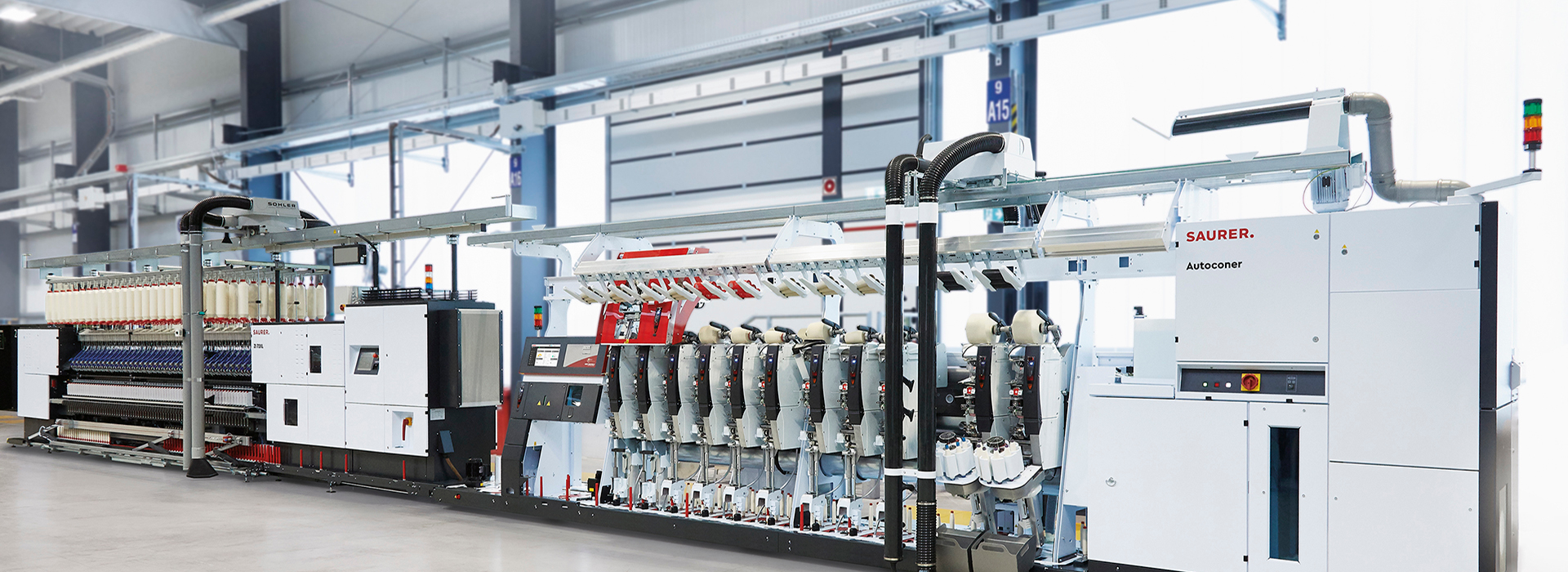
Ring spinning is a modern yarn spinning technology that consists of successive stages, which start from the opening of the fiber in the bale to the frame of the spinning machine and the end of the winding. Compared with ring spinning technology, ring spinning technology has the characteristics of ring spinning technology, so ring spinning can achieve a more uniform yarn surface, less thick and thi...
 ONLINE
 xinzino70@gmail.com